Insights
Apr 30, 2025
NIKE’s Sustainable Packaging Initiatives: A Step Toward a Greener Future
As global awareness around climate change grows, major brands are under increasing pressure to reduce their environmental footprint. NIKE, one of the world’s most influential sportswear companies, has made significant strides in sustainability—especially in the area of eco-friendly packaging. Through innovative design, responsible sourcing, and waste-reduction strategies, NIKE’s sustainable packaging initiatives reflect its commitment to a circular future.
1. Transition to Recycled and Renewable Materials
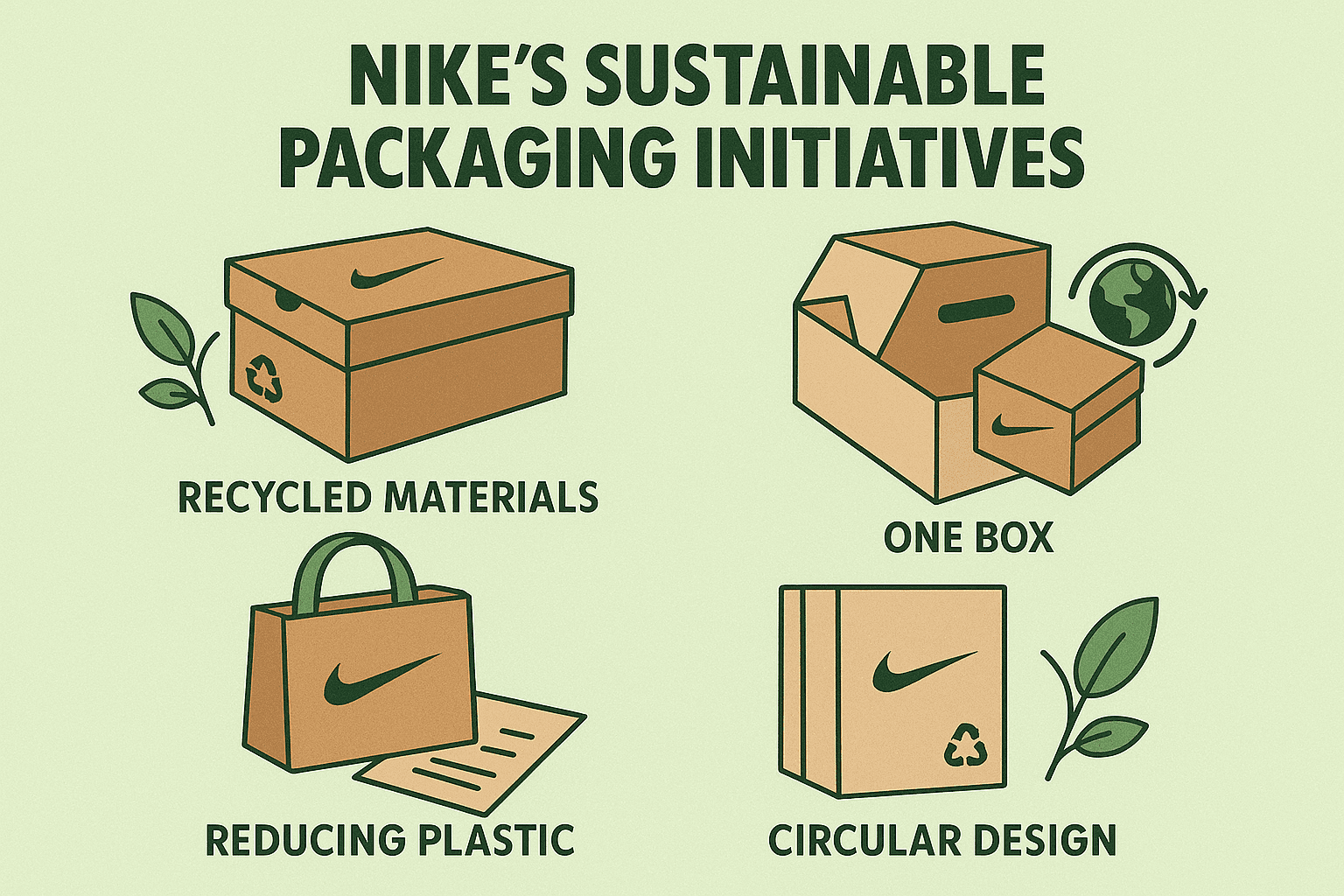
One of NIKE’s primary packaging goals is the adoption of recycled content across shoeboxes, mailers, hangtags, and apparel packaging. Today, most NIKE shoeboxes are made from more than 90% recycled cardboard, drastically cutting the use of virgin materials.
The brand also incorporates renewable fibers, ensuring packaging production has a smaller carbon footprint. This shift not only reduces deforestation but also supports NIKE’s long-term commitment to circularity.
2. The “One Box” Packaging Innovation
NIKE introduced the “One Box” solution, a clever design that combines a traditional shoebox and shipping box into a single structure. This eliminates the need for double packaging, reducing waste and lowering shipping emissions. The One Box packaging is made with recycled materials and printed with minimal ink to ensure recyclability.
This innovation has helped NIKE save millions of pounds of cardboard, making it one of the company’s most effective sustainability moves.
3. Reducing Plastic Usage Across Product Lines
Plastic pollution is a major global concern, and NIKE is actively working to minimize plastic in its packaging. The brand has cut down single-use plastics by transitioning to:
Recyclable paper wraps
Bio-based films
Reusable tote bags in selected retail stores
NIKE’s long-term aim is to eventually eliminate virgin plastics entirely from its packaging processes.
4. Circular Design and Recyclability
NIKE’s packaging follows the principles of circular design, ensuring that every material used can be recycled or repurposed. The company uses simple, mono-material construction so that consumers can easily recycle packaging through standard waste streams.
To further support recycling habits, NIKE includes clear sustainability messaging and instructions on many of its boxes and tags.
5. Digital Solutions to Reduce Packaging Waste
To limit physical waste, NIKE continues shifting toward digital product experiences, reducing the need for printed materials such as manuals, receipts, and marketing inserts. Through apps like NIKE App and SNKRS, users receive product information digitally, helping cut paper consumption.
6. Supporting Global Sustainability Goals
NIKE’s sustainable packaging initiatives align with global environmental goals such as:
Reducing carbon emissions
Lowering waste in landfills
Supporting responsible resource management
By investing in eco-friendly packaging, NIKE contributes to the broader mission of creating a healthier planet and encouraging other brands to follow suit.
Conclusion
NIKE’s sustainable packaging journey demonstrates how major brands can influence positive environmental change. Through recycled materials, innovative packaging design, reduced plastic use, and strong circularity principles, NIKE continues to move toward a greener future. As consumer demand for eco-friendly products increases, NIKE’s leadership sets a powerful example for sustainability in the global fashion and sportswear industry.
More to Discover


Insights
Apr 30, 2025
NIKE’s Sustainable Packaging Initiatives: A Step Toward a Greener Future
As global awareness around climate change grows, major brands are under increasing pressure to reduce their environmental footprint. NIKE, one of the world’s most influential sportswear companies, has made significant strides in sustainability—especially in the area of eco-friendly packaging. Through innovative design, responsible sourcing, and waste-reduction strategies, NIKE’s sustainable packaging initiatives reflect its commitment to a circular future.
1. Transition to Recycled and Renewable Materials
One of NIKE’s primary packaging goals is the adoption of recycled content across shoeboxes, mailers, hangtags, and apparel packaging. Today, most NIKE shoeboxes are made from more than 90% recycled cardboard, drastically cutting the use of virgin materials.
The brand also incorporates renewable fibers, ensuring packaging production has a smaller carbon footprint. This shift not only reduces deforestation but also supports NIKE’s long-term commitment to circularity.
2. The “One Box” Packaging Innovation
NIKE introduced the “One Box” solution, a clever design that combines a traditional shoebox and shipping box into a single structure. This eliminates the need for double packaging, reducing waste and lowering shipping emissions. The One Box packaging is made with recycled materials and printed with minimal ink to ensure recyclability.
This innovation has helped NIKE save millions of pounds of cardboard, making it one of the company’s most effective sustainability moves.
3. Reducing Plastic Usage Across Product Lines
Plastic pollution is a major global concern, and NIKE is actively working to minimize plastic in its packaging. The brand has cut down single-use plastics by transitioning to:
Recyclable paper wraps
Bio-based films
Reusable tote bags in selected retail stores
NIKE’s long-term aim is to eventually eliminate virgin plastics entirely from its packaging processes.
4. Circular Design and Recyclability
NIKE’s packaging follows the principles of circular design, ensuring that every material used can be recycled or repurposed. The company uses simple, mono-material construction so that consumers can easily recycle packaging through standard waste streams.
To further support recycling habits, NIKE includes clear sustainability messaging and instructions on many of its boxes and tags.
5. Digital Solutions to Reduce Packaging Waste
To limit physical waste, NIKE continues shifting toward digital product experiences, reducing the need for printed materials such as manuals, receipts, and marketing inserts. Through apps like NIKE App and SNKRS, users receive product information digitally, helping cut paper consumption.
6. Supporting Global Sustainability Goals
NIKE’s sustainable packaging initiatives align with global environmental goals such as:
Reducing carbon emissions
Lowering waste in landfills
Supporting responsible resource management
By investing in eco-friendly packaging, NIKE contributes to the broader mission of creating a healthier planet and encouraging other brands to follow suit.
Conclusion
NIKE’s sustainable packaging journey demonstrates how major brands can influence positive environmental change. Through recycled materials, innovative packaging design, reduced plastic use, and strong circularity principles, NIKE continues to move toward a greener future. As consumer demand for eco-friendly products increases, NIKE’s leadership sets a powerful example for sustainability in the global fashion and sportswear industry.
More to Discover
Insights
Apr 30, 2025
NIKE’s Sustainable Packaging Initiatives: A Step Toward a Greener Future
As global awareness around climate change grows, major brands are under increasing pressure to reduce their environmental footprint. NIKE, one of the world’s most influential sportswear companies, has made significant strides in sustainability—especially in the area of eco-friendly packaging. Through innovative design, responsible sourcing, and waste-reduction strategies, NIKE’s sustainable packaging initiatives reflect its commitment to a circular future.
1. Transition to Recycled and Renewable Materials
One of NIKE’s primary packaging goals is the adoption of recycled content across shoeboxes, mailers, hangtags, and apparel packaging. Today, most NIKE shoeboxes are made from more than 90% recycled cardboard, drastically cutting the use of virgin materials.
The brand also incorporates renewable fibers, ensuring packaging production has a smaller carbon footprint. This shift not only reduces deforestation but also supports NIKE’s long-term commitment to circularity.
2. The “One Box” Packaging Innovation
NIKE introduced the “One Box” solution, a clever design that combines a traditional shoebox and shipping box into a single structure. This eliminates the need for double packaging, reducing waste and lowering shipping emissions. The One Box packaging is made with recycled materials and printed with minimal ink to ensure recyclability.
This innovation has helped NIKE save millions of pounds of cardboard, making it one of the company’s most effective sustainability moves.
3. Reducing Plastic Usage Across Product Lines
Plastic pollution is a major global concern, and NIKE is actively working to minimize plastic in its packaging. The brand has cut down single-use plastics by transitioning to:
Recyclable paper wraps
Bio-based films
Reusable tote bags in selected retail stores
NIKE’s long-term aim is to eventually eliminate virgin plastics entirely from its packaging processes.
4. Circular Design and Recyclability
NIKE’s packaging follows the principles of circular design, ensuring that every material used can be recycled or repurposed. The company uses simple, mono-material construction so that consumers can easily recycle packaging through standard waste streams.
To further support recycling habits, NIKE includes clear sustainability messaging and instructions on many of its boxes and tags.
5. Digital Solutions to Reduce Packaging Waste
To limit physical waste, NIKE continues shifting toward digital product experiences, reducing the need for printed materials such as manuals, receipts, and marketing inserts. Through apps like NIKE App and SNKRS, users receive product information digitally, helping cut paper consumption.
6. Supporting Global Sustainability Goals
NIKE’s sustainable packaging initiatives align with global environmental goals such as:
Reducing carbon emissions
Lowering waste in landfills
Supporting responsible resource management
By investing in eco-friendly packaging, NIKE contributes to the broader mission of creating a healthier planet and encouraging other brands to follow suit.
Conclusion
NIKE’s sustainable packaging journey demonstrates how major brands can influence positive environmental change. Through recycled materials, innovative packaging design, reduced plastic use, and strong circularity principles, NIKE continues to move toward a greener future. As consumer demand for eco-friendly products increases, NIKE’s leadership sets a powerful example for sustainability in the global fashion and sportswear industry.